




NEW DROP
Quick view


Quick view
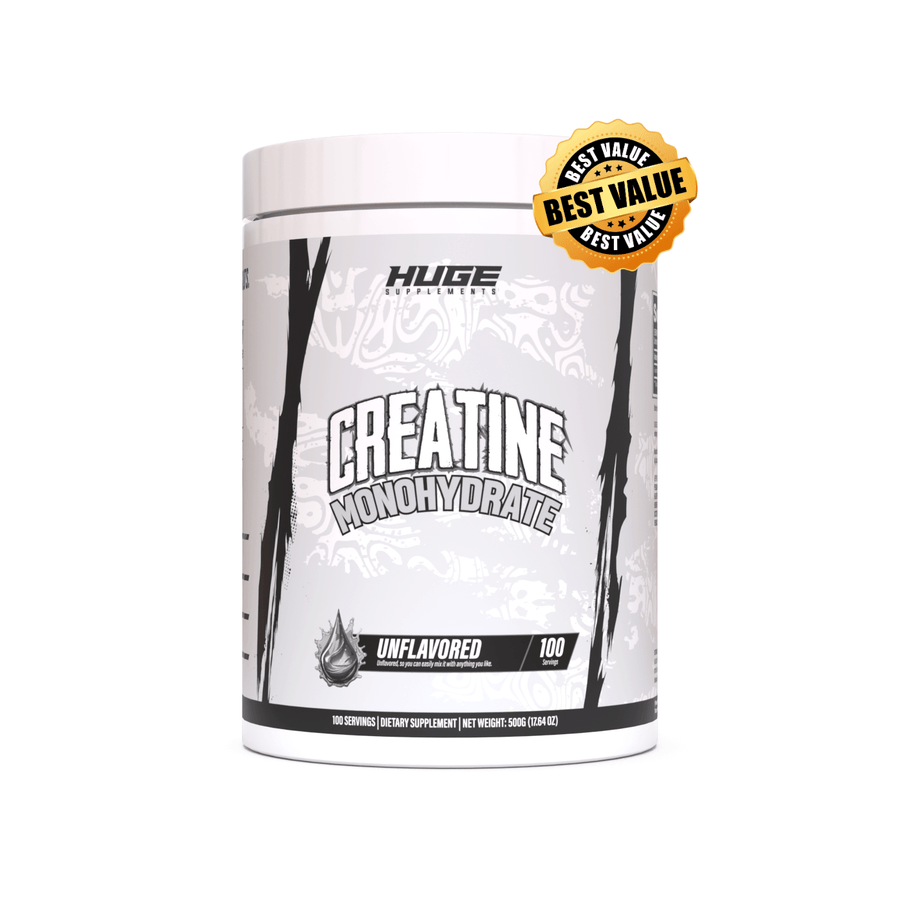


Quick view


Quick view


Quick view


Is Creatine a Good Fit for Your Goals?


THIRD PARTY TESTED
Each batch undergoes rigorous quality checks to confirm purity and strength, giving you full confidence in the product.

PURE MICRONIZED
Our creatine monohydrate contains no fillers or additives, with micronized particles that ensure purity for smooth mixing and better absorption.

OPTIMAL 5G DOSING
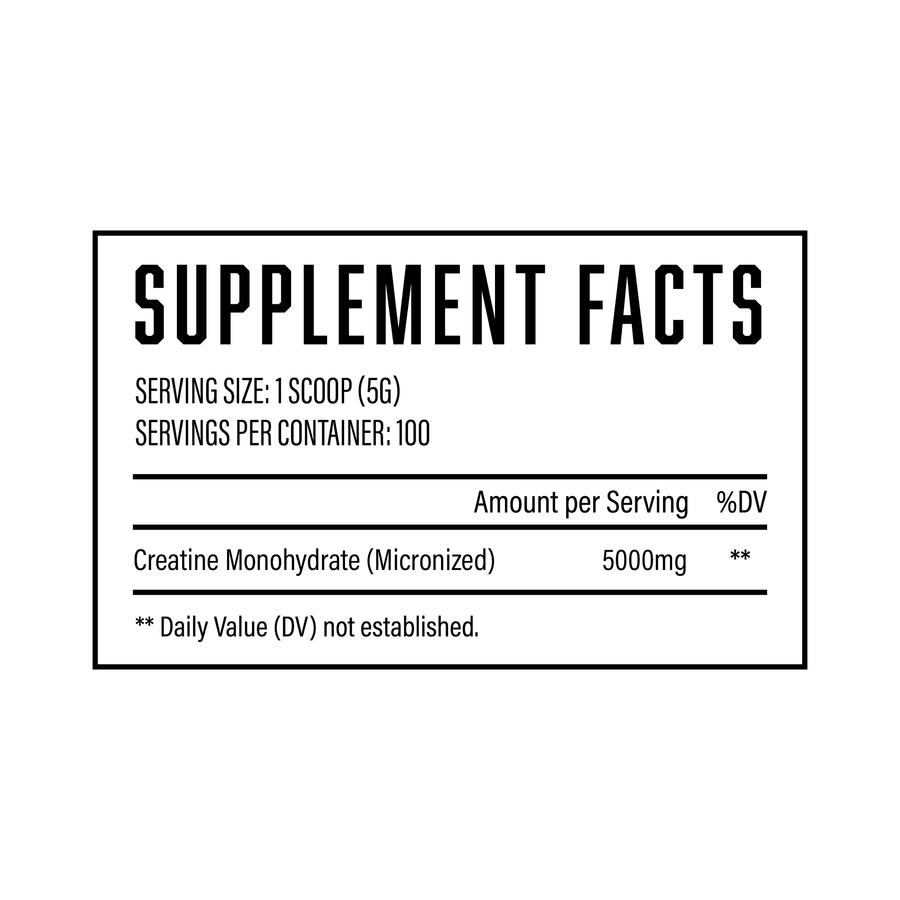
Each serving provides the full 5000mg clinical dosage—the exact amount proven effective in research studies for athletes at every level, from recreational lifters to NCAA competitors.

Frequently Asked Questions
The research-backed dosage is 5 grams daily, which is exactly what each serving of our creatine supplements delivers. Timing doesn't matter much—consistency does. Take creatine at whatever time works best for you so you remember to take it every day. Some athletes prefer to have their protein shake post-workout, while others take it first thing in the morning. Both approaches work equally well for maintaining saturated muscle creatine levels and supporting cognitive processing during demanding training blocks.
You'll start noticing performance improvements within 2-4 weeks of consistent daily use. This is the time required for your muscles to become fully saturated with creatine. Some lifters opt for a "loading phase" of 20g daily for 5-7 days to speed up saturation, but this isn't necessary—it just gets you to full saturation faster. Once saturated, maintain with the standard 5g daily dose, and creatine supports performance long-term.
Both timing strategies work, and research shows minimal difference between pre- and post-workout consumption. What matters most is taking creatine consistently every day. Many athletes find it convenient to mix unflavored creatine into their post-workout protein shake, while others add it to their pre-workout routine. Pick whatever fits your schedule and stick with it.
Some users experience minor water retention when first starting creatine, which is actually a sign it's working—creatine helps pull water into muscle cells to support performance. This is intramuscular hydration, not subcutaneous bloat that affects your appearance. Although creatine draws water into muscles, it doesn't cause the soft, puffy look associated with water retention under the skin. Any initial weight gain is lean muscle hydration, and concerns about dehydration are unfounded when you stay adequately hydrated.
Some emerging data suggest that creatine might help sustain cognitive clarity during moments of mental fatigue or insufficient rest. Your brain uses significant ATP, and creatine helps maintain energy availability for cognitive processing. While more research is needed, athletes often report improved focus and mental clarity alongside their physical gains.
Individuals with kidney problems or pre-existing kidney disease should consult their doctor before supplementing, as creatine is processed through the kidneys. People with kidney issues or those taking certain medications that affect kidney function should also seek medical guidance. For the vast majority of healthy adults, including vegetarian athletes who may not get creatine naturally from meat, creatine is well-tolerated with no significant side effects. Some users report mild nausea if taken on an empty stomach—take creatine with food to avoid this.
Yes—creatine monohydrate is one of the most thoroughly researched supplements available, with an extensive safety record spanning over 25 years of studies. Research consistently demonstrates no adverse effects on kidney function, liver health, or other markers in healthy individuals. It's approved for use by major sports organizations and considered safe for long-term supplementation without cycling.